How to Maximise Your Outdoor Space for the Year Ahead
The new year is here. A burst of optimism? A fresh to-do list? For many organisations, it’s time to fix that long-neglected outdoor area. Whether you’re managing a school, club, business precinct, or community space, sometimes the answer is making the most of what you already have. Maximising your outdoor space isn’t about expensive overhauls. It’s about smart upgrades, thoughtful planning. Think of it as a fresh, functional New Year’s tune-up for your space.
What you already have
Before dreaming up new seating zones and shade structures, take a slow lap around your outdoor area. What’s working and what’s not? Where do people naturally gather and where do they avoid?
Often, the biggest improvements come from spotting small inefficiencies. Maybe your popular walkway bottlenecks at peak times, maybe the student lunch area has great sunlight for plants but terrible conditions for humans, or maybe your club’s seating hasn’t aged gracefully.
A practical assessment gives you the clarity (and the permission) to plan with purpose instead of guesswork.
Think flow
Outdoor spaces work best when movement feels natural. Intuitive pathways, clear entry points and seating positioned where people want to pause can make an ordinary area feel instantly more usable.
In schools – how do students move around your campus? In clubs need – can you cater for big match-day crowds? In businesses – how do your staff use breakout areas? When you optimise flow, everything feels calmer, safer, and more efficient, even when the space is busy.
Upgrade the essentials
There’s one universal truth about outdoor areas: people will only use them if they’re comfortable. And comfort outside comes down to three things – shade, seating, and shelter.
Shade protects from the sun and encourages year-round use. Seating invites people to linger, socialise, or refuel and shelter helps weatherproof your plans.
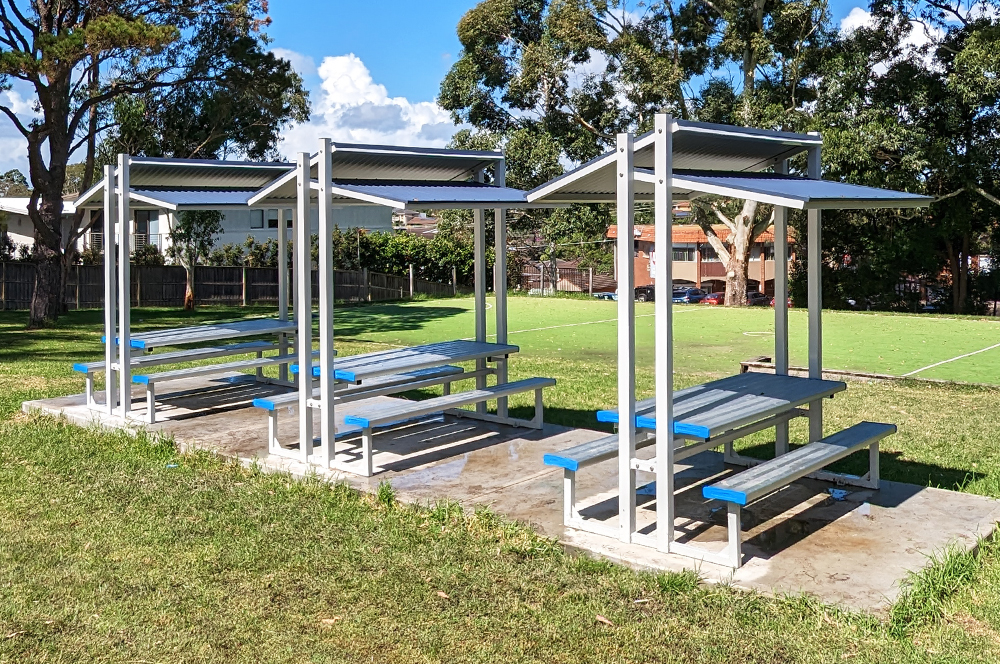
Sometimes it’s not about dramatic transformations, but about quality upgrades to these three essentials. Replace worn-out benches with powder-coated aluminium. Add a modern shade structure over your most-used zone. Create a sheltered spot that makes rainy days far less disruptive. These improvements feel small, but they dramatically increase usability.
Flexible furniture
Your current outdoor space won’t be the same space you need in three years, especially if you’re a growing club, expanding school, or business with shifting foot traffic.
This is where modular and low-maintenance furniture shines. Portable seating lets you scale up for large events and pack away when the crowds disappear. Recycled or timber-look materials offer minimal maintenance. Reconfigurable tables and benches bring versatility without looking temporary or mismatched.
Flexibility is the ultimate future-proofing strategy.
Purposeful zones
Great outdoor spaces tell people how to use them. Identify what your organisation needs most. A quiet area for staff breaks? A social hub for students? A shaded viewing zone for spectators? A community corner for informal gatherings?
Once you define the purpose, the layout follows. Group seating intentionally, create shade where people will spend time, add bike racks where commuters need them. Design the space to support real behaviour.
Small changes, big improvements
Maximising your outdoor space doesn’t require a grand redesign. By understanding your environment, you can identify where it can work harder, and make smart upgrades to elevate comfort, flow, and functionality.
Let’s collaborate and make your most overlooked corners valued parts of your organisation.

Celebrate Parks Week 2026: Where Community Comes to Life

Media Release: Felton Industries launches Tow & Fold mobile grandstand
New Year, New Spaces: Outdoor Trends Shaping 2026

Media Release: Felton Industries announces four 2025 Felton Grant recipients

Stronger Spaces Start With Our End of Year Savings

Game On: Smart Grandstand Choices for Every Budget
Top Five Outdoor Study Spots on Campus and How to Furnish Them