
How to Activate Underused Spaces
Across schools and workplaces, valuable outdoor areas are often hiding in plain sight. These missed opportunities take the form of empty courtyards, walkways, and unused edges of ovals. These overlooked spaces can be transformed into high-use zones that support connection, learning, and everyday engagement.Why spaces stay empty
In many cases, it’s not the location that’s the problem – it’s the lack of purpose. Empty courtyards feel uninviting, walkways are treated purely as go-betweens, and oval edges have no clear function. Without somewhere to sit, gather, or pause, people will move on. For schools, this translates to lost opportunities for informal learning, social interaction, or quiet breakout spaces. For businesses, it results in underutilised real estate that could support collaboration, breaks, or casual meetings.Start with behaviour
The key to activating these areas is to think about how people want to use them.- Where do students naturally gather during breaktimes?
- Where do staff stop for a chat or a coffee?
- Which areas get good shade, light, or views?
Small changes, big impact
Activation doesn’t require large-scale redesign – it’s about adding simple, well-placed elements that invite people to stay. Seating creates pause points where people can gather or rest, while tables support interaction, from lunch breaks to informal meetings. Shelter increases usability, making spaces functional in different weather conditions and placement drives usage, positioning furniture where people already pass through. Shift spaces from pass-through to destination.The role of furniture
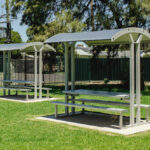
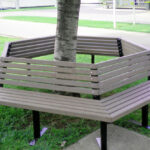
Furniture is often the missing link between space and use. The Park Setting with Backrests creates a comfortable, inclusive social hub, seating up to eight people with added backrests for support, making it especially suitable for adults, elderly users, and accessible environments. Its sleek aluminium design allows it to integrate seamlessly into both urban and natural settings. When combined with the 3×3 Aluminium Skillion Shelter, the space becomes significantly more functional year-round. With nine square metres of shade, a durable aluminium frame, and a Colorbond roof, the shelter protects users from harsh sun and weather while improving comfort and usability. Together, this pairing transforms open areas into shaded, inviting destinations that encourage people to gather, stay longer, and use the space consistently.Design for visibility
Activated spaces work best when they’re visible and easy to access. If furniture is hidden away or placed too far from main pathways, it will become redundant. Position seating along natural movement paths, place gathering areas where people already pause and keep layouts open and welcoming. The more intuitive the space feels, the more likely people are to use it.From overlooked to essential
Unused space is untapped potential. When underused areas are activated, they don’t just get used – they become essential. Schools gain new spaces for connection and flexible learning. Businesses benefit from improved staff wellbeing, collaboration, and the use of outdoor environments. Let’s collaborate and find the right furniture to activate your spaces.
Designing Future-Ready Multi-Use Outdoor Spaces
Designing Future-Ready Multi-Use Outdoor Spaces The best outdoor spaces aren't just focused on today. They're designed to adapt to tomorrow's...
Preparing Outdoor Spaces for Spring Learning
Preparing Outdoor Spaces for Spring Learning It might be frosty now, but spring isn’t far away, and it’s the perfect...
Designing for Dwell Time, Connection and Performance
Designing for Dwell Time, Connection and Performance Public spaces succeed when people choose to use them. Long after construction is...

Great Placemaking Starts With Furniture and Shade
Great Placemaking Starts With Furniture and Shade For councils, creating vibrant parks, reserves, and community spaces is about more than...
Building Better Clubs Beyond the Field
Building Better Clubs Beyond the Field A successful sports club is about more than what happens during the game. From...
Designing for Shade, Heat and Heavy Use
Designing for Shade, Heat and Heavy Use Outdoor spaces in Australia don’t get an off-season. Whether it’s a school quadrangle...
Facility Managers: Specify Outdoor Furniture Right
Facility Managers: Specify Outdoor Furniture Right For councils, schools, and large organisations, specifying outdoor furniture isn’t just about aesthetics; it’s...

Media Release: Felton Industries launches Elite Grandstand Range
Felton Industries launches Elite grandstand range featuring improved comfort and structured seating April 7th, 2026 – Felton Industries, Australia’s leading...