Get recycling ready for National Recycling Week
National Recycling Week runs from the 8th to 14th of November every year. This year it is celebrating its 25th anniversary a timely reminder of the importance of recycling and reducing waste. The average person in Australia generates 540kg of household waste per year, showing we all need to do our bit to cut down on waste. One easy and effective way to start good recycling habits is through a recycling program at school. Here’s some tips on how to get started.
Setting up a recycling system in schools is an easy and effective way to both help the environment and build a better community within your schools. Involving both students and staff within this process reiterates the importance of such initiatives and helps to develop stronger relationships within your school community. A great way to do this is start a green team, a dedicated group of teachers and students that take the lead on recycling and further involve the larger community within green initiatives. Implementing a recycling coordinator will streamline the process and help to achieve program goals.
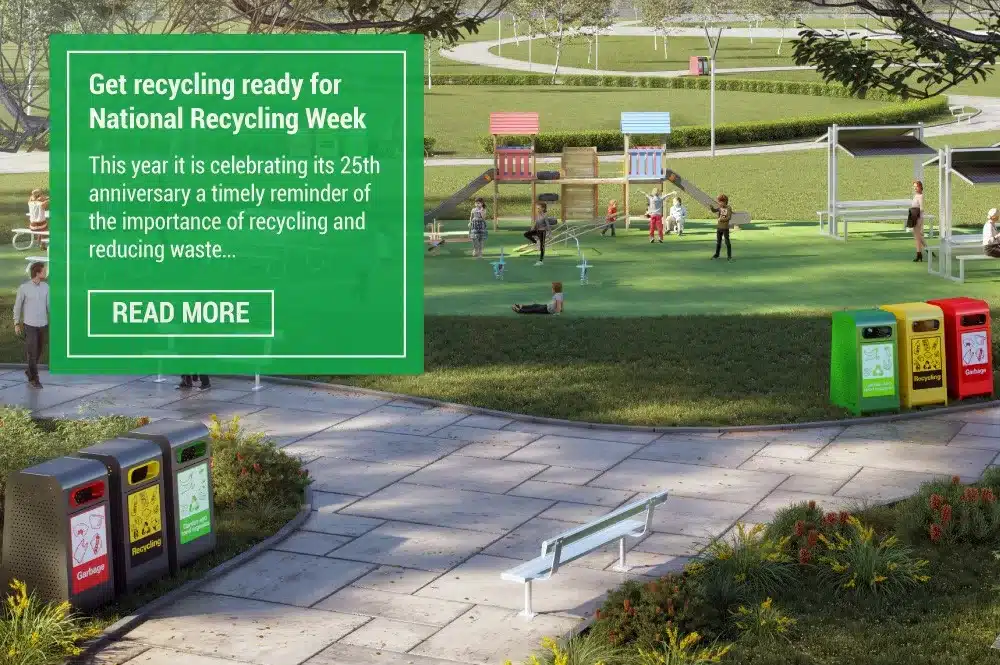
First off it helps to pick a list of items to recycle which can include canteen and lunch box items, printer cartridges, mobile phones, batteries, mobile phones and aluminium cans. Reinforcing what can be and can’t be recycled with strong visual aids is another important step within this. Use labels like ‘recycle’ ‘recycling only’ and ‘rubbish’ are helpful reminders. Also separating bins with different colours help to further make strong distinctions between type of materials. Felton’s colourful range of bin enclosures make this distinction easy.
Common recyclables within schools include items like paper and cardboard, beverage bottles, cans and cartons and electronics. With paper comprising a significant proportion of waste produced in a school, therefore it is important to have a base knowledge of the various types and what can be recycled. Examples of these include copy paper, school letterheads and coloured paper.
Here are some easy ways to reduce waste in your school:
(1) Transition to electronic bulletins/memos
(2) Recycle more paper by ensuring students use front and back of paper
(3) Construct art projects from recycled materials
(4) Reduce the number of paper handouts
(5) Encourage the use of reusable containers
(6) Install air dryers within bathrooms to reduce paper towel usage
Did you know in Australia on the back of products there are recycling symbols with numbers 1 to 5 that tell you the type of material the item is made from? Anything under 5 can be recycled within your yellow recycling bin.
If you are interested in implementing recycling further into your school community but need some infrastructure to assist you, Felton’s range of Educational Bin Enclosures can help. Available in 120L and 240L sizes and in seven sensational colours, Educational Bin Enclosures are an ideal accompaniment to your new recycling program. Different colours can match recycling initiatives for paper and cardboard, garden and food organics and general recycling and of course waste. Bin enclosures feature a tailored chute design, are strong durable and safe, are fully enclosed and offer a bright colourful solution to your schools recycling needs. Contact the team today for more information on our Educational Bin Enclosures on 1 800 834 016.

Stronger Spaces Start With Our End of Year Savings
Game On: Smart Grandstand Choices for Every Budget
Top Five Outdoor Study Spots on Campus and How to Furnish Them
Why Schools Love Aluminium for Busy Playgrounds
Transform Your Outdoor Space for Summer with Durable Furniture
Muddy to Match-Ready: Cleaning Your Aluminium Benches
Making Play Inclusive With Wheelchair-Friendly Settings